

Practice Like A Pro 15.0
Mitch Giguere is back with another edition of Practice Like A Pro. As a regular CoachThem contributor, Mitch shares skill-specific drills, coaching details, and practical ways to bring pro-level concepts into everyday practices. In Practice Like A Pro 15.0, the focus shifts to the habits that create the foundation for everything else: handling rims under pressure, angling, body position, gap control, puck support, and communication.
For most teams, the season is either about to start or already underway.
Training camp is over, the lines are starting to take shape, and every coach is currently convinced that this is the year their team will finally make perfect line changes.
Give it a few games.
At this time of the year, it’s easy to get excited about systems, special teams, and everything we want our team to become. But before getting too far ahead, it’s important to build the habits that will show up every night.
Rims under pressure. Angling. Body position. Gap. Support. Communication.
Nothing on this list is going to break Hockey Twitter, but these are the details that make everything else work.
So here are five drills to help get those habits going early in the season.
Practice Like A Pro 15.0 – Rims Under Pressure
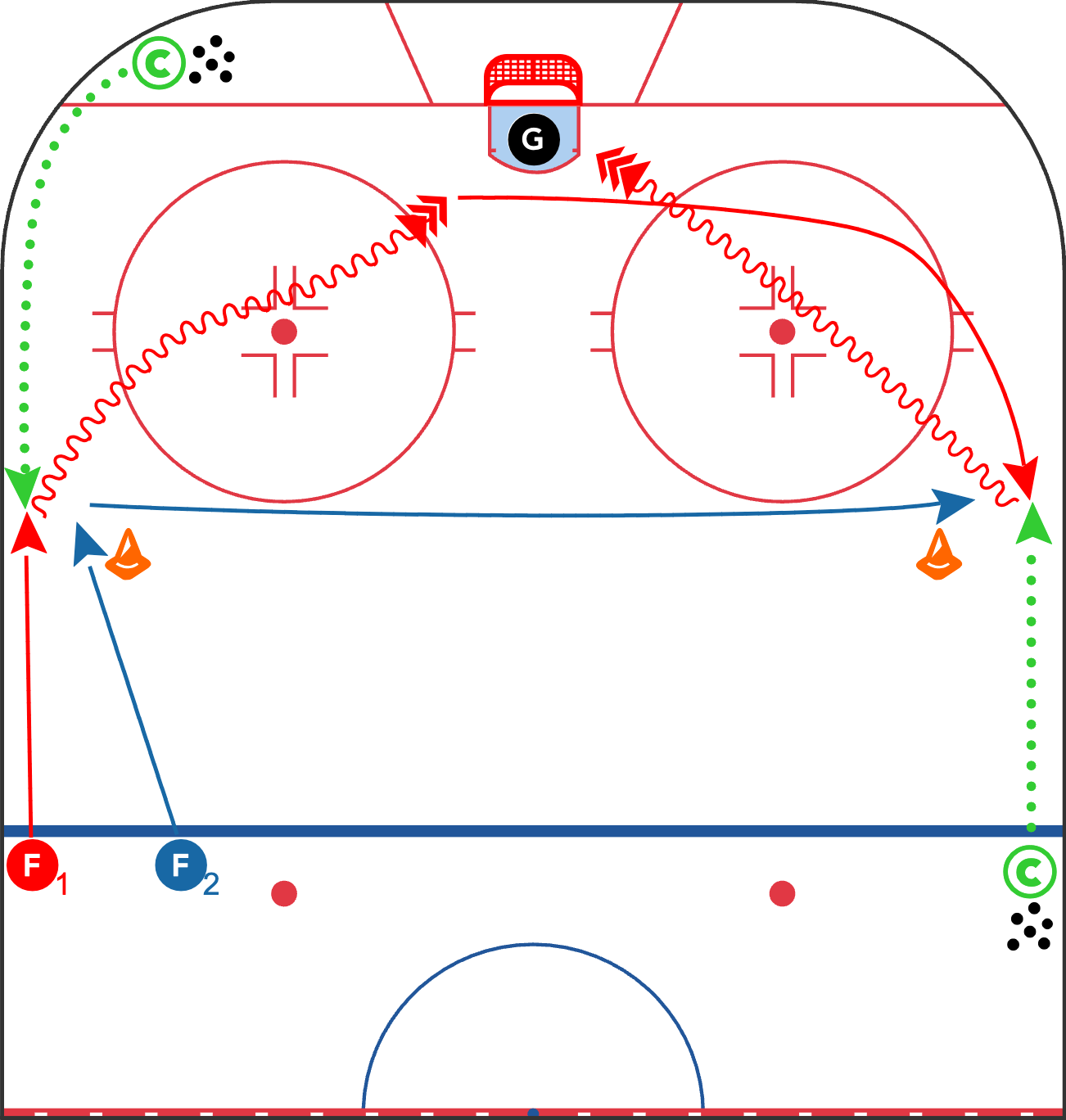
Adding a little pressure to a drill is always better than adding none.
Coming down low and handling a rim on the yellow can be tricky, especially when players have to execute on both their forehand and backhand while feeling pressure behind them.
Now they don’t have unlimited time to settle the puck, look around, have a coffee, and decide what to do next.
They have to scan, read the pressure, get into the right body position, and execute.
This drill allows you to easily adjust the amount of pressure coming from F2. Start with lighter pressure if you're introducing the concept, then increase it as the players become more comfortable.
The player comes down for the first rim, then works back up the wall to handle the second puck on the yellow.
Forehand. Backhand. Pressure. Lots of reps.
Simple setup, but a situation your wingers are going to see all season long.
Practice Like A Pro 15.0 – PSD – Angling Down Low
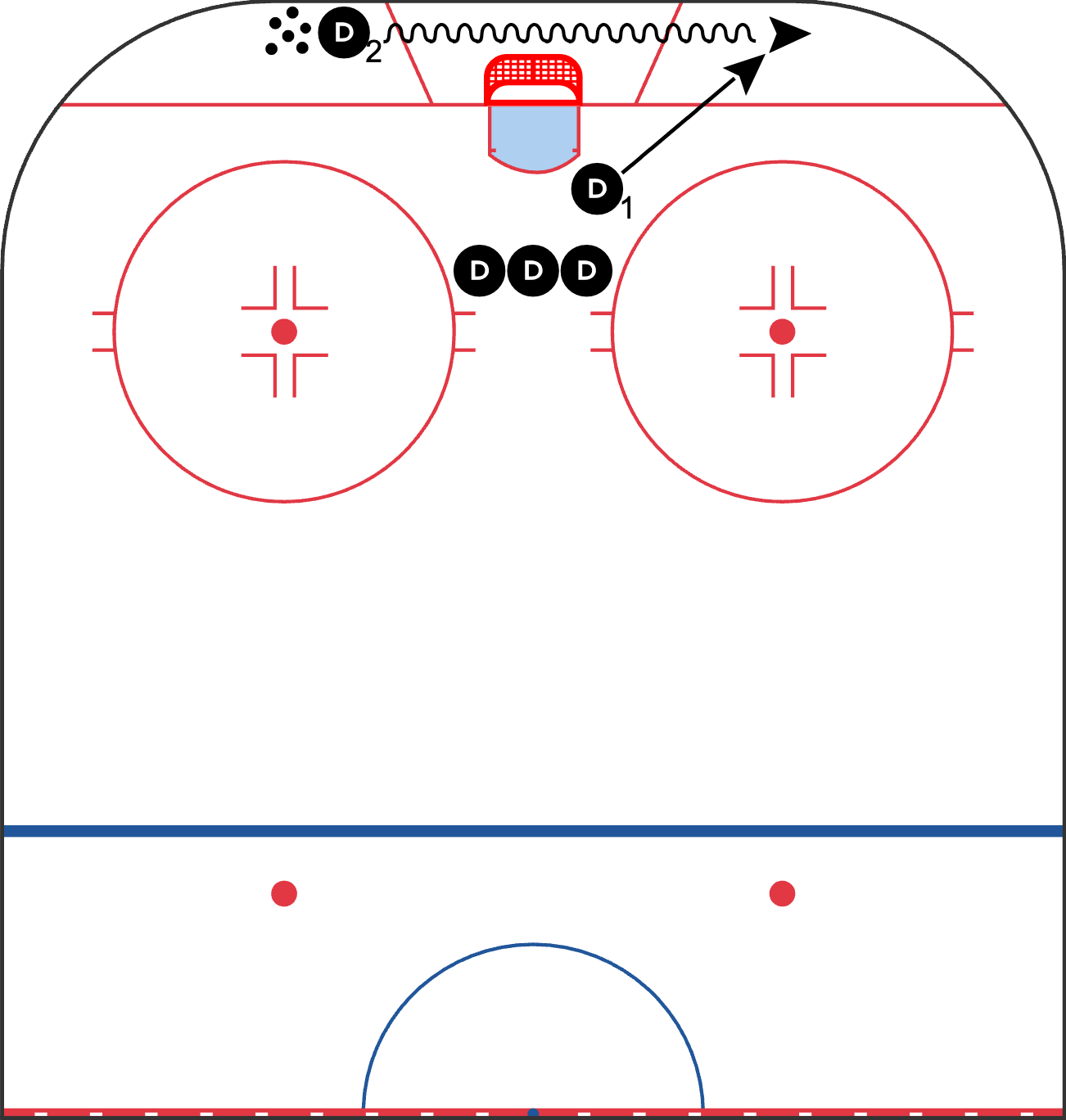
I’m pretty sure most coaches have thought about running a drill like this before and then said:
“That’s way too simple.”
Well, if NHL teams are doing it, I think we’re allowed to do it too.
I use it, and I love it.
D1 closes on D2 and works on taking the proper angle behind the net. After the rep, D1 becomes D2 and the drill continues.
The biggest teaching point is how the defenseman approaches the puck carrier.
Watch the stick.
The defenseman isn’t just skating down there hoping his body gets the job done. The stick is on the ice, taking away space and disrupting the play before body contact even happens.
A good angle behind the net can kill the play before it develops.
Again, nothing fancy.
But “simple” and “easy” are two very different things.
Practice Like A Pro 15.0 – PSF – Attacking Free Space
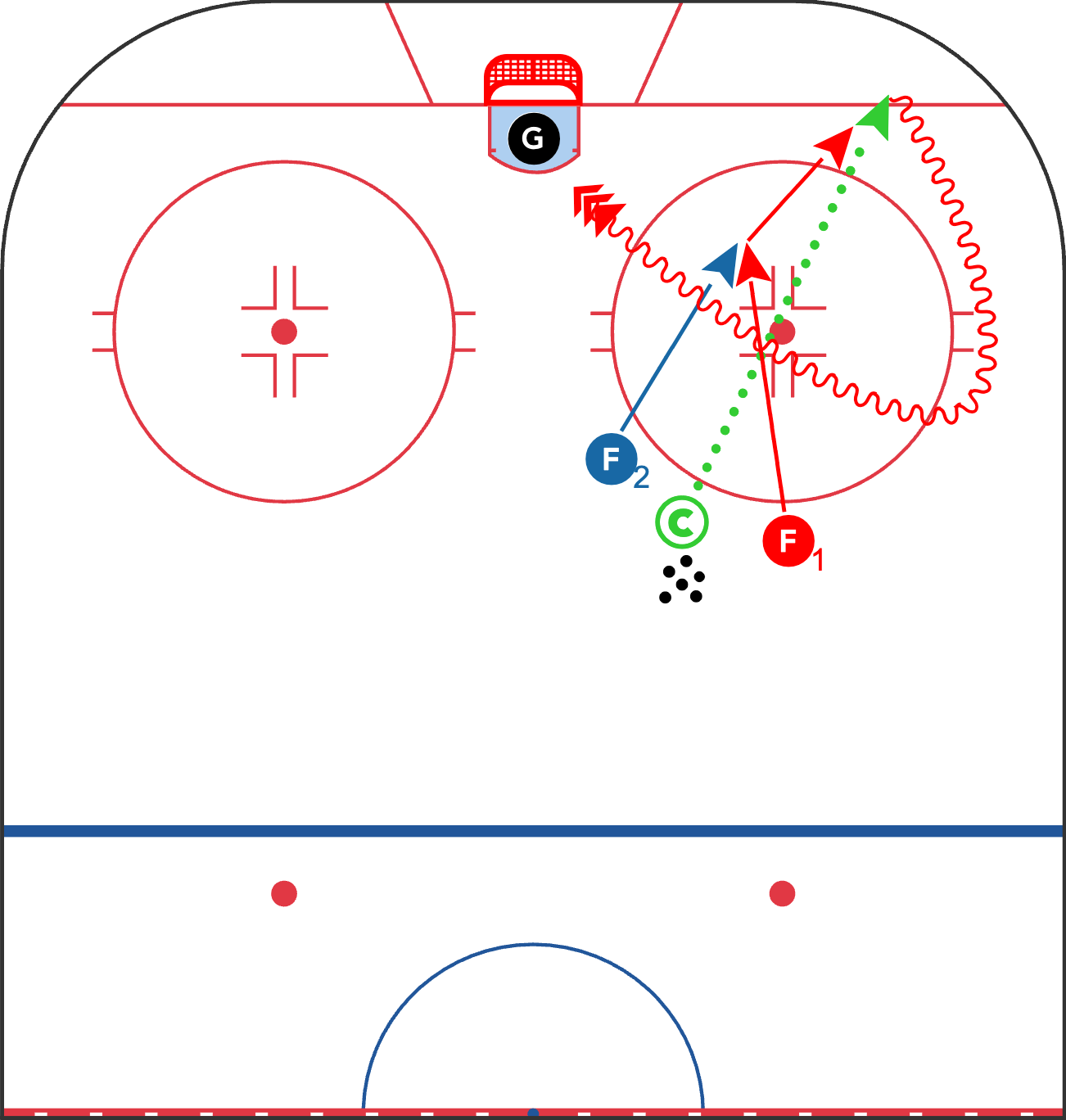
Attacking free space can save you a lot of work in a puck battle.
There are plenty of terms coaches use for this concept. I personally like inside body position.
The objective is to gain the ice between your opponent and the puck. Once you establish that position, you have an advantage: you can get the first touch, protect the puck, and dictate where the play goes next.
Instead of arriving at the battle and immediately wrestling with someone, attack the available space first.
Work smarter before you have to work harder.
In this drill, the forward works on the retrieval, establishes inside body position, moves the puck back to the coach, and then attacks the net.
It’s a simple sequence that gives you a lot of repetitions while reinforcing a habit that translates directly to games.
And your players might eventually realize that not every puck battle needs to look like WrestleMania.
Practice Like A Pro 15.0 – 2v1 Low and Long
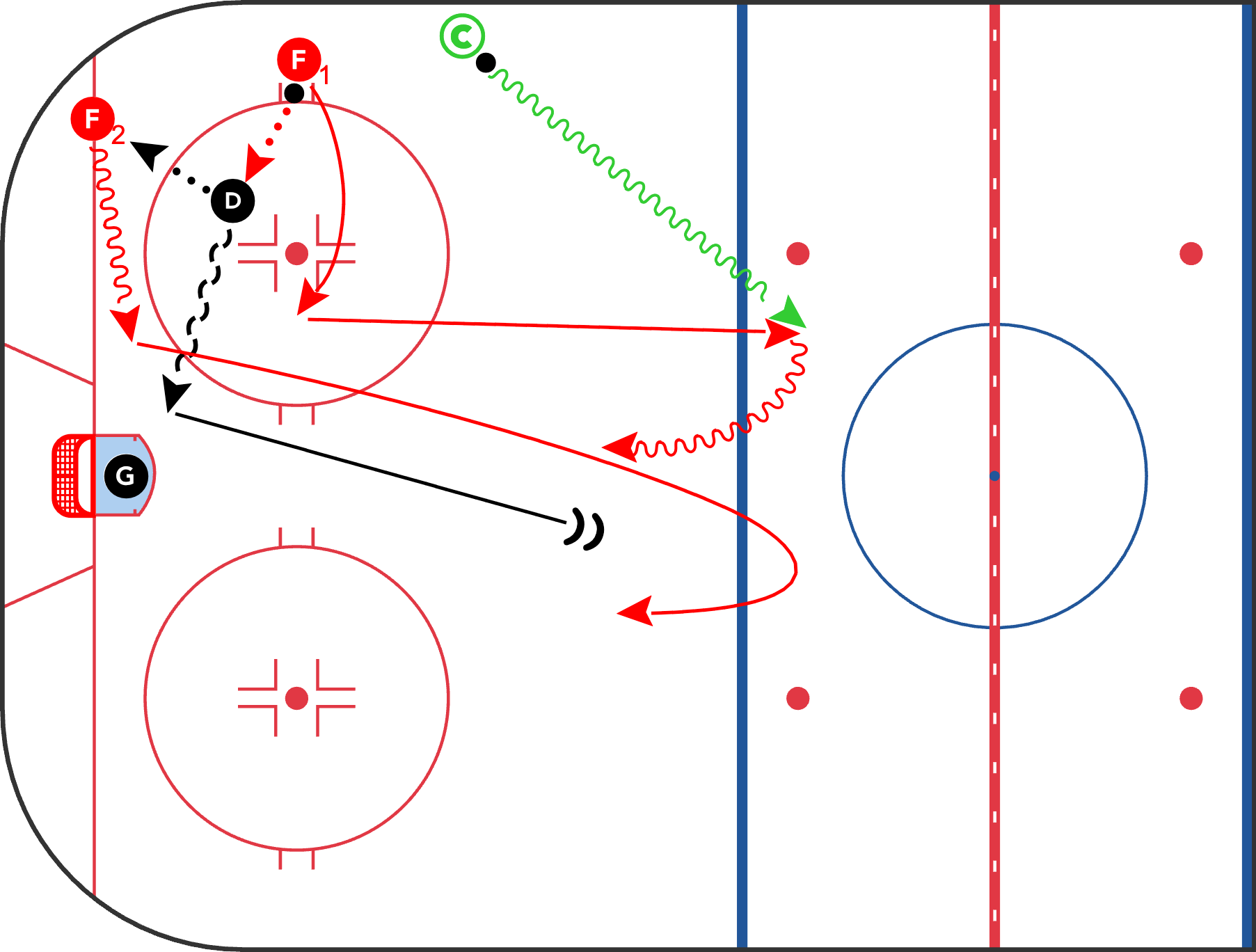
What defenseman hasn’t tried to join the rush, watched a forward turn the puck over, and immediately thought:
“Oh no.”
This drill creates exactly that problem.
It starts with a 2v1 down low, forcing the defenseman to defend with very little space.
On the whistle, both forwards take off and try to catch the coach and steal the puck.
At the same time, the defenseman has to get up the ice and join the play because the moment the forwards recover the puck, they turn back and attack on another 2v1.
Now the D has to recover quickly, establish a tight gap, and get as close to the rush as possible without getting caught flat-footed.
The speed of the defenseman getting up ice and the quality of the gap are crucial.
Because joining the offense is fun.
Getting back after the turnover?
That’s the part we sometimes forget to advertise.
Practice Like A Pro 15.0 – 2v2 Entry with Token Pressure
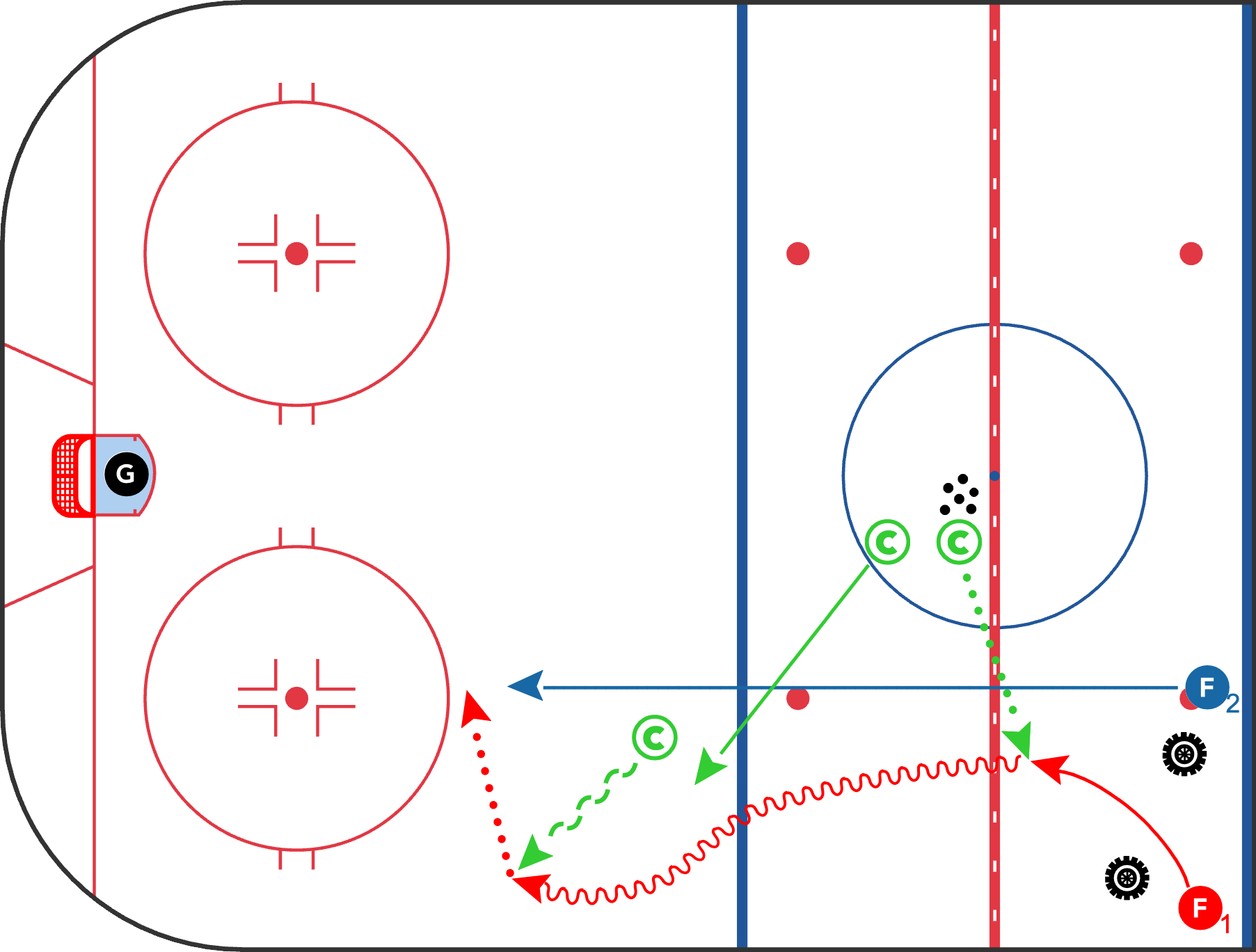
Sometimes you have to slow things down and work on fundamentals and routes before expecting players to execute them at full speed in a game.
Here’s the situation:
A defenseman is closing on you along the wall, and you have a teammate supporting behind you.
What are your options?
This drill allows the forward to receive a pass in the neutral zone, get away from the wall, and attack the defender nose-to-nose instead of skating directly into pressure.
As the defenseman closes toward the wall, F2 has an important job.
Communicate and become an option.
F2 needs to be loud, available, and in a position where the puck carrier knows exactly where the support is coming from.
The puck carrier can then read the pressure instead of following a predetermined route.
Sometimes we talk so much about X’s and O’s that we forget one of the easiest ways to make five players work together:
Talk.
And yes, “I was open” after the play is over does not count as communication.
Conclusion
Early in the season, everyone wants to move fast.
Install the systems. Get the power play going. Build the forecheck. Work on the neutral zone. Fix the breakout.
And somehow do all of it before the first weekend.
But the structure only works if the habits underneath it are solid.
Handling rims under pressure, taking the right angle, establishing inside body position, maintaining a tight gap, supporting the puck, and communicating are not complicated concepts.
They’re just really important ones.
So especially early in the season, don’t be afraid to slow things down and teach the details properly. Once players understand the why, you can add speed, pressure, and complexity.
Because sometimes the difference between a great system and a terrible system is simply whether the players actually execute it.
Good luck with the start of the season.
And enjoy those first few games when every coach is still telling themselves:
“It’s early.”
About Mitch Giguere
Mitch Giguere is a father of four children and a hockey enthusiast. He is currently the Director of Hockey Operations and Head Coach for the Greensboro Gargoyles in the ECHL, affiliate of the Carolina Hurricanes (NHL) and Chicago Wolves (AHL). In addition, Mitch is a former KHL coach and has obtained his High Performance 2 certification from Hockey Canada.
Mitch also has an Advanced Coaching Diploma (NCCP4) and the Learning Accelerator Certificate received through the Canadian Sports Institute. As a CoachThem Teammate, Mitch contributes monthly blogs focused on skill-specific drills, practice efficiency, and modern coaching habits.
Frequently Asked Questions
What should hockey coaches focus on early in the season?
Early in the season, coaches can benefit from establishing foundational habits before adding more complex systems. Details like handling rims under pressure, angling, body position, gap control, puck support, and communication give players a stronger base to build from.
Why is body position important in puck battles?
Establishing inside body position helps a player gain the space between the opponent and the puck. That can create an advantage by allowing the player to get the first touch, protect possession, and influence where the play goes next.
How can coaches teach players to handle pressure more effectively?
Coaches can introduce pressure gradually so players learn to scan, recognize where pressure is coming from, establish the right body position, and execute before the intensity increases. As players become more comfortable, additional speed and pressure can be added.
Why is communication important in hockey drills?
Communication helps players identify support options and make decisions before pressure arrives. Players who communicate early and clearly can give the puck carrier more information and help the group work together more effectively.

Now available on iOS — access your saved practice plans on the go.
Build Better Practices — Faster
Trusted by NHL, PWHL, and youth coaches across the world.
Start Your 10-Day Free TrialAlready have an account? Log in
Know other coaches who’d love CoachThem?
Join CoachThem Rewards and earn commissions for every referral.
Written by Mitch Giguere in collaboration with the CoachThem Team